
Using Salesforce Search in Mule 4
One of the most used actions when we work with Salesforce integrations is the use of query. But there's one action we don't use very often: the Salesforce Object Search Language (SOSL). In this post we walk through a Mule 4 application that uses SOSL to validate Contacts and Leads and decide whether to update or create records.
GitHub repository with the Mule project can be found at the end of the post.
One of the most used actions when we work with Salesforce integrations is the use of query. It allows us to pull information from any table, do some subqueries, and pull relationship data. But there’s one action we, as developers, don’t use very often (sometimes we don’t even know this operation is available for us) and it is the Salesforce Object Search Language (SOSL).
SOSL and SOQL
Based on the Force.com Developer documentation:
A SOQL query is the equivalent of a SELECT SQL statement and searches the org database. SOSL is a programmatic way of performing a text-based search against the search index.
Whether you use SOQL or SOSL depends on whether you know which objects or fields you want to search, plus other considerations.
Use SOQL when you know which objects the data resides in, and you want to:
- Retrieve data from a single object or from multiple objects that are related to one another.
- Count the number of records that meet specified criteria.
- Sort results as part of the query.
- Retrieve data from number, date, or checkbox fields.
Use SOSL when you don’t know which object or field the data resides in, and you want to:
- Retrieve data for a specific term that you know exists within a field. Because SOSL can tokenize multiple terms within a field and build a search index from this, SOSL searches are faster and can return more relevant results.
- Retrieve multiple objects and fields efficiently where the objects might or might not be related to one another.
- Retrieve data for a particular division in an organization using the divisions feature.
- Retrieve data that’s in Chinese, Japanese, Korean, or Thai. Morphological tokenization for CJKT terms helps ensure accurate results.
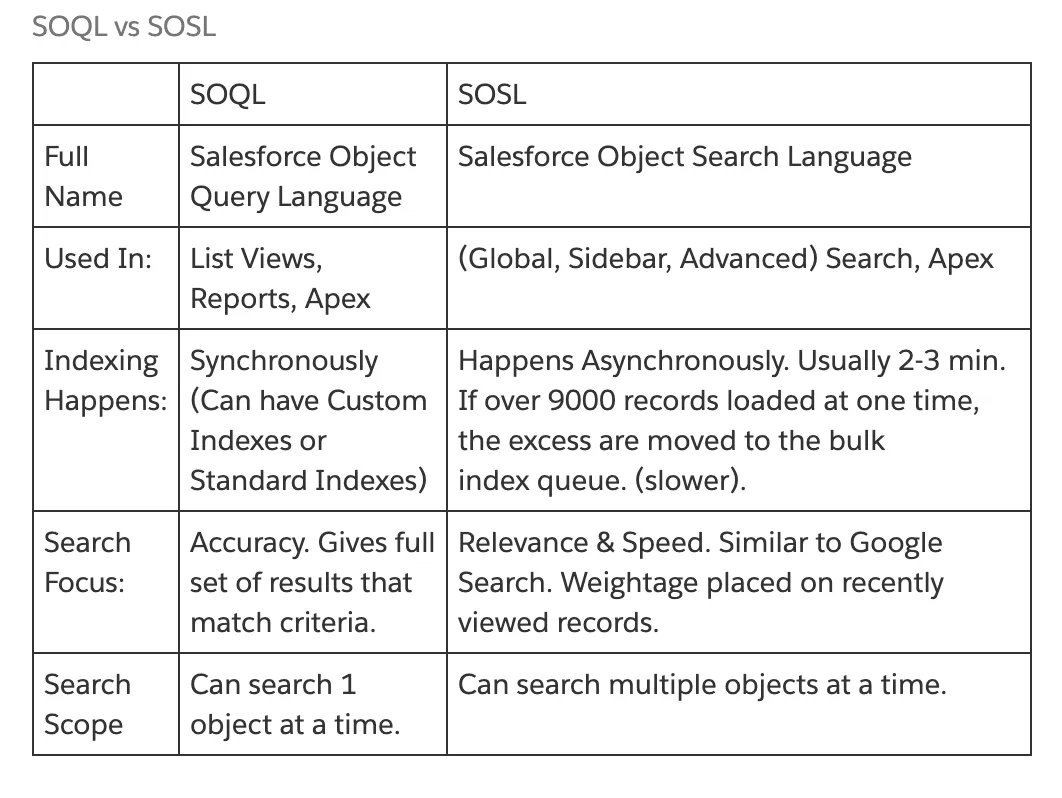
Here are some differences between SOSL and SOQL.
You might be asking yourself how this is helpful and how you can use it. Well, let’s think of a scenario.
Scenario
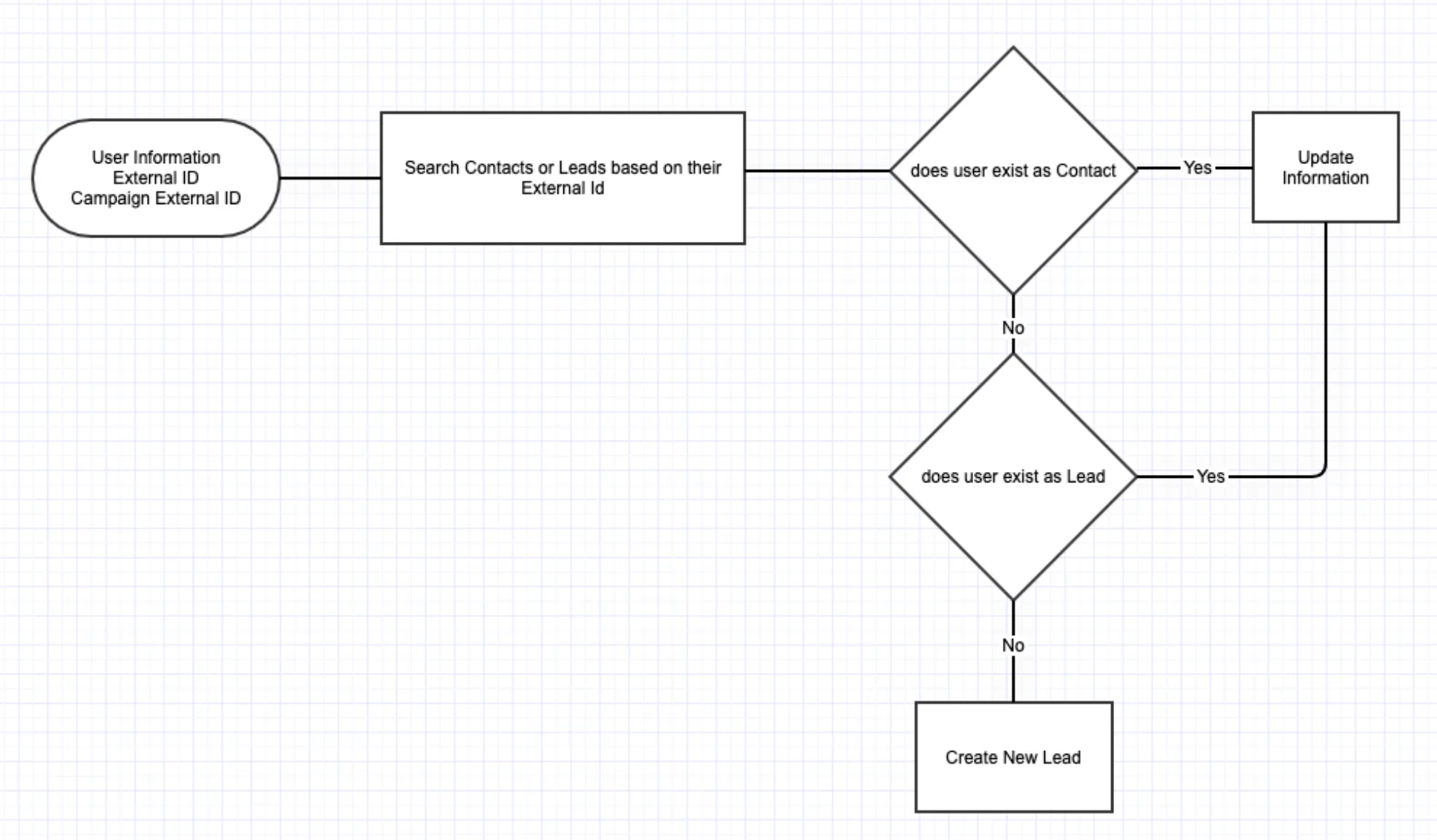
The general idea is to be able to process User information coming from any source and use the information to be able to validate if a Contact or Lead already exists in the platform using a specific external Id field. Based on the result we should be able to update a Contact / Lead or create a brand new Lead record.
Implementation
I will create a pretty simple application to demonstrate how we can accomplish this. The Mule application would be created in Mule 4 and I will set a few records in a DataWeave component to simulate the input payload.
input-data-flow
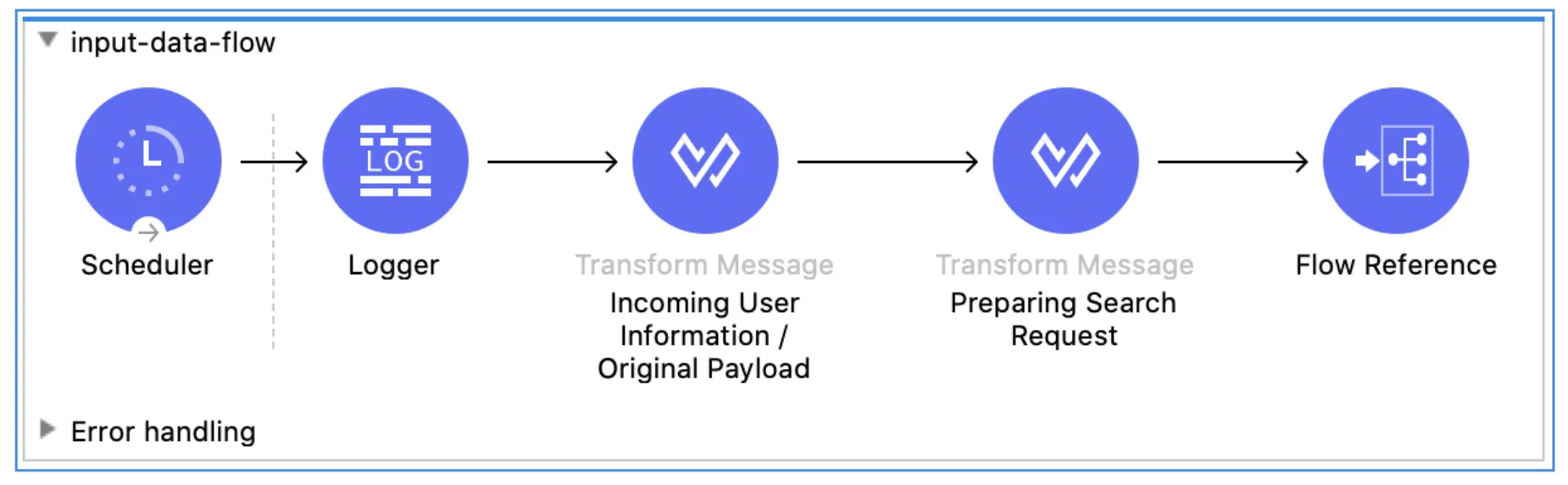
This flow contains a scheduler to manually trigger the integration for demonstration purposes. Then we set the incoming payload in a DataWeave component just like this:
There’s a variable called “originalPayload”, which will be used to filter the information out once we get Salesforce information.
In the next DW component (Preparing Search Request) we just convert all the external Id values from the original response to a plain string value concatenated by OR, making this an understandable payload value for the Salesforce search. The code looks like this:
%dw 2.0
output application/java
---
(payload map {
  ids: "\"" ++ ($.id) ++ "\""
}.ids) joinBy " OR "
salesforce-search-flow
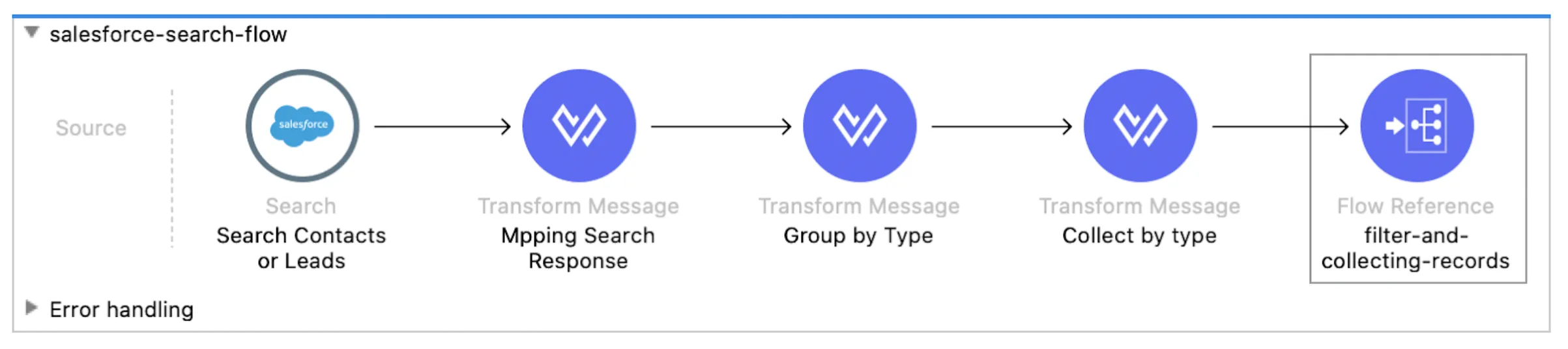
This flow will be in charge of making the search call into Salesforce, grouping the response and creating the variables we need to filter the originalPayload with the existing records.
In the Salesforce search, I will pass the next expression:
FIND { :ids } IN ALL FIELDS RETURNING Contact(Id,external_id__c,Email), Lead(Id,external_id__c,email)Where the :ids parameter is the previous string we created separating the Ids by OR. In this search we are asking Salesforce to retrieve the records from Contacts and Leads searching in all the fields. After the information is returned, we can tell which fields we need from each object.
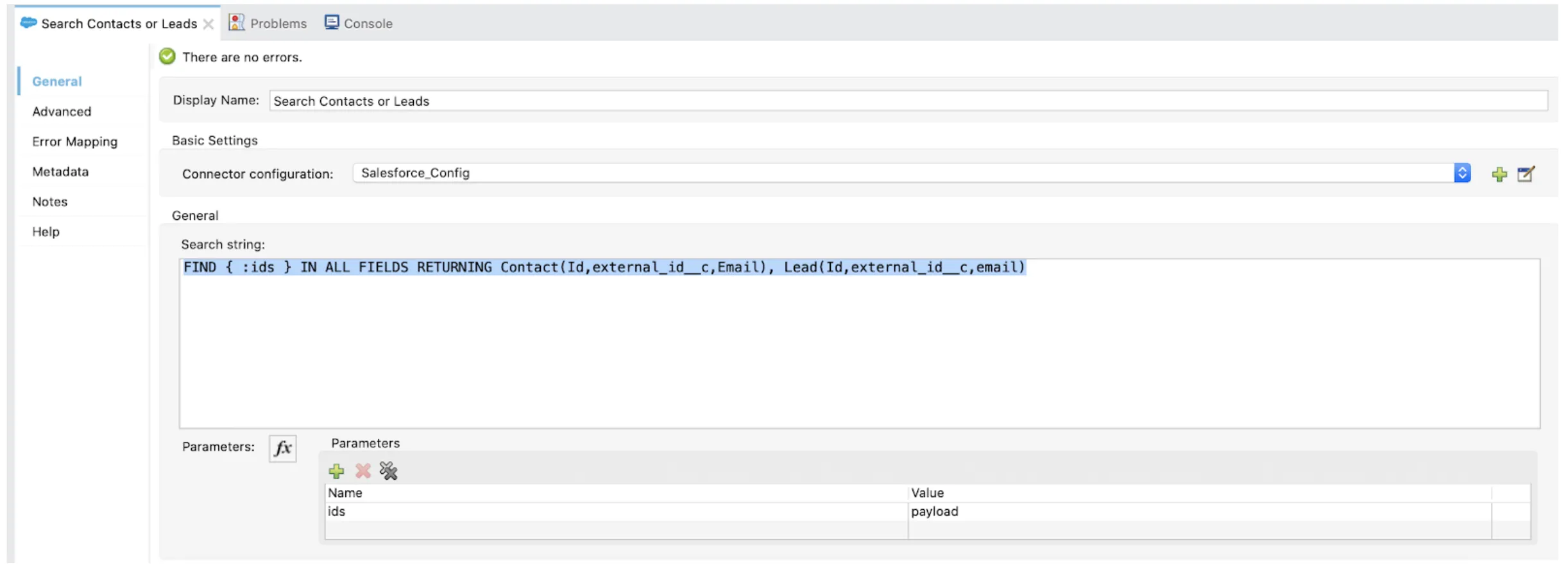
“Mapping Search Response” component just creates a map of the Salesforce results (payload.searchRecords). After this, we will group the information by type. We will use this script:
%dw 2.0
output application/java
---
(payload groupBy ((value, index) -> value."type"))
In the same component, I’m creating a variable called salesforceResponseMap which contains a key-value map we can access using a value to get the full record.
%dw 2.0
output application/java
---
{
  (payload map {
    (($.external_id__c):$) if $.Id != null
  })
}
“Collect by type” is a different variable that allows us to separate the records from the Contacts and Leads we found and set the Id as the main key in order to be able to filter the data in the next components. At this point we already know which Contacts and Leads have been found.
%dw 2.0
output application/java
---
{
  fromContacts: payload.Contact map (salesforceContact, IndexOfContact)->{
    (id: salesforceContact.external_id__c) if (salesforceContact.external_id__c != null),
  },
  fromLeads: payload.Lead map (salesforceLead, indexOfLeads)->{
    (id: salesforceLead.external_id__c) if (salesforceLead.external_id__c != null),
  }
}
filter-and-collecting-records
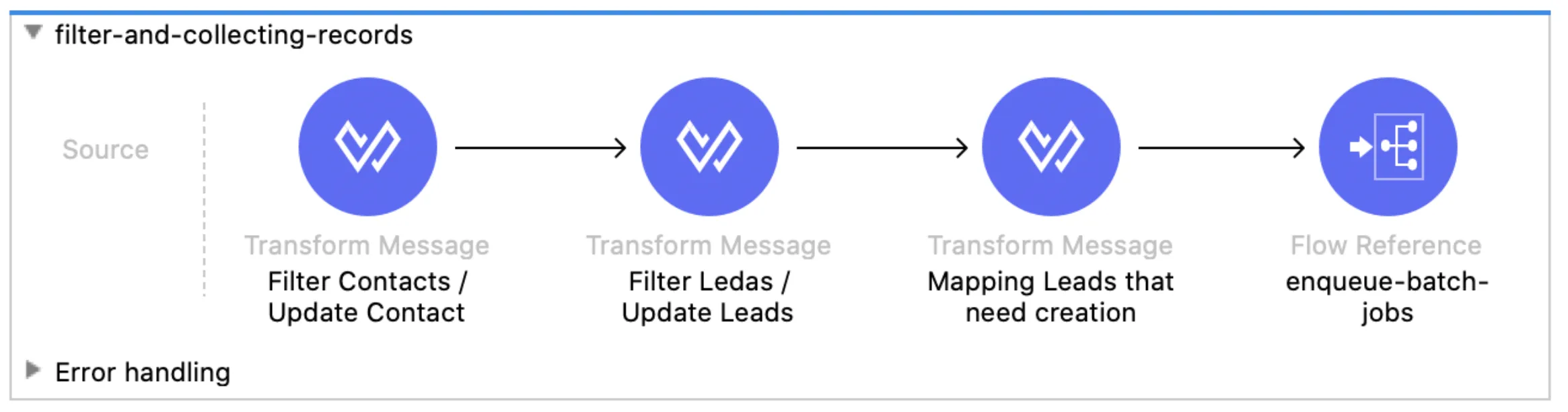
This flow will filter the data from the original payload by removing existing contacts from Salesforce and leaving the records that need to be created as Leads.
“Filter Contacts / Update Contact” will take any existing records from the groupedObjects.fromContacts variable based on the Id using this script:
%dw 2.0
output application/java
---
vars.originalPayload filter (not (vars.groupedObjects.fromContacts.id contains ($.id)))
We are basically removing the records to an array from another one.
In the same component we are doing basically the same but without the not operator so it means we are collecting the information that needs to be updated as Contact and we are able to map the fields we need to update.
%dw 2.0
output application/java
---
(vars.originalPayload filter ((vars.groupedObjects.fromContacts.id contains ($.id))) map (contact, indexOfContact) -> {
  Id: vars.salesforceResponseMap[contact.id].Id,
  FirstName: contact."First Name"
})
“Filter Leads / Update Leads” is basically the same but using the Leads group.
Finally the remaining component collects the remaining information of records that need to be created as Leads in Salesforce and we can map the information.
enqueue-batch-jobs
The meaning of this job is just to set the payloads for update and create records, the only additional thing on this component is that we are specifying the sObject and externald variables, so, instead of adding a batch component for each type, dynamically we are dynamically passing the sObject for updates and sObject and externalId for upsert calls. This means we can reuse our batch processes.
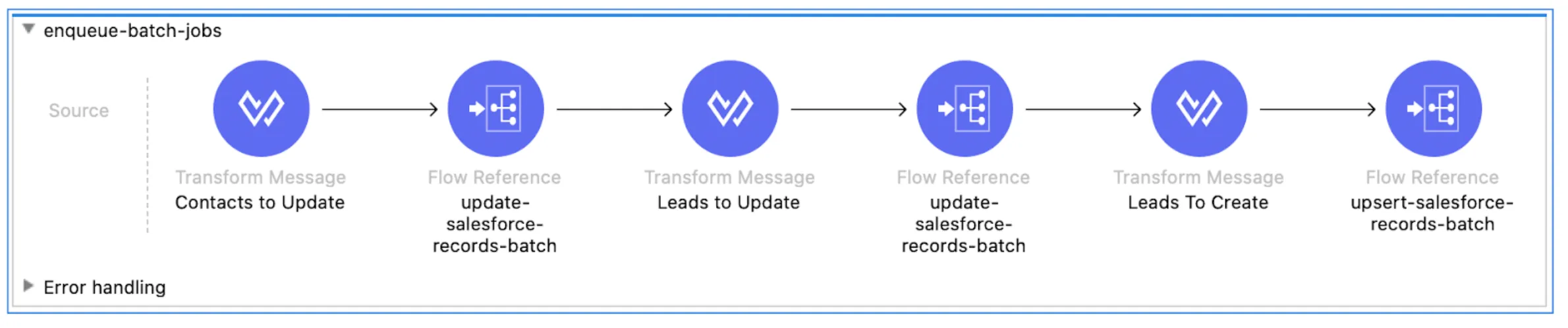
Finally we can see the batch processing flow. One batch will focus in updating the objects and just control the response from Salesforce with a DW component like this:
%dw 2.0
output application/json
---
payload.items map {
  id: $.id,
  success: $.successful,
  (field: $.errors[0].fields[0]) if $.successful == false,
  (message: $.errors[0].message) if $.successful == false,
  (statusCode: $.errors[0].statusCode) if $.successful == false
}
Basically, we can collect the responses and use them.
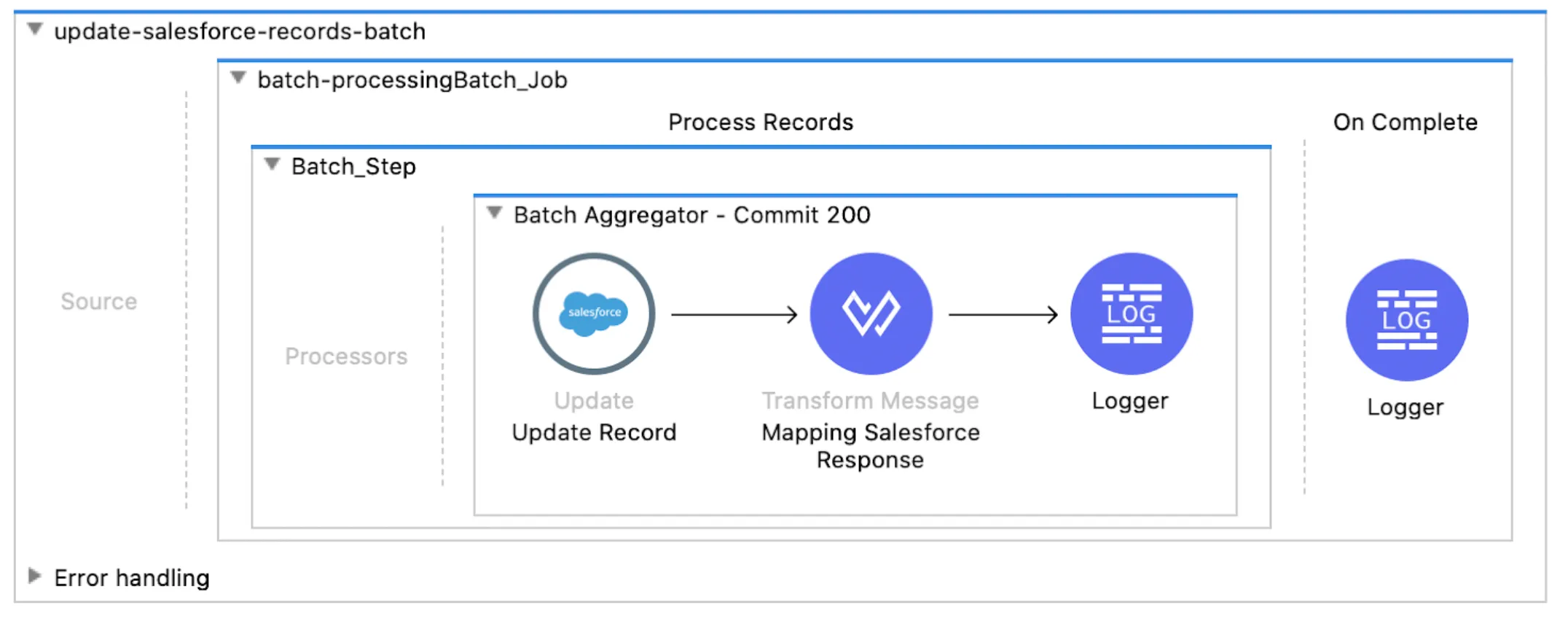
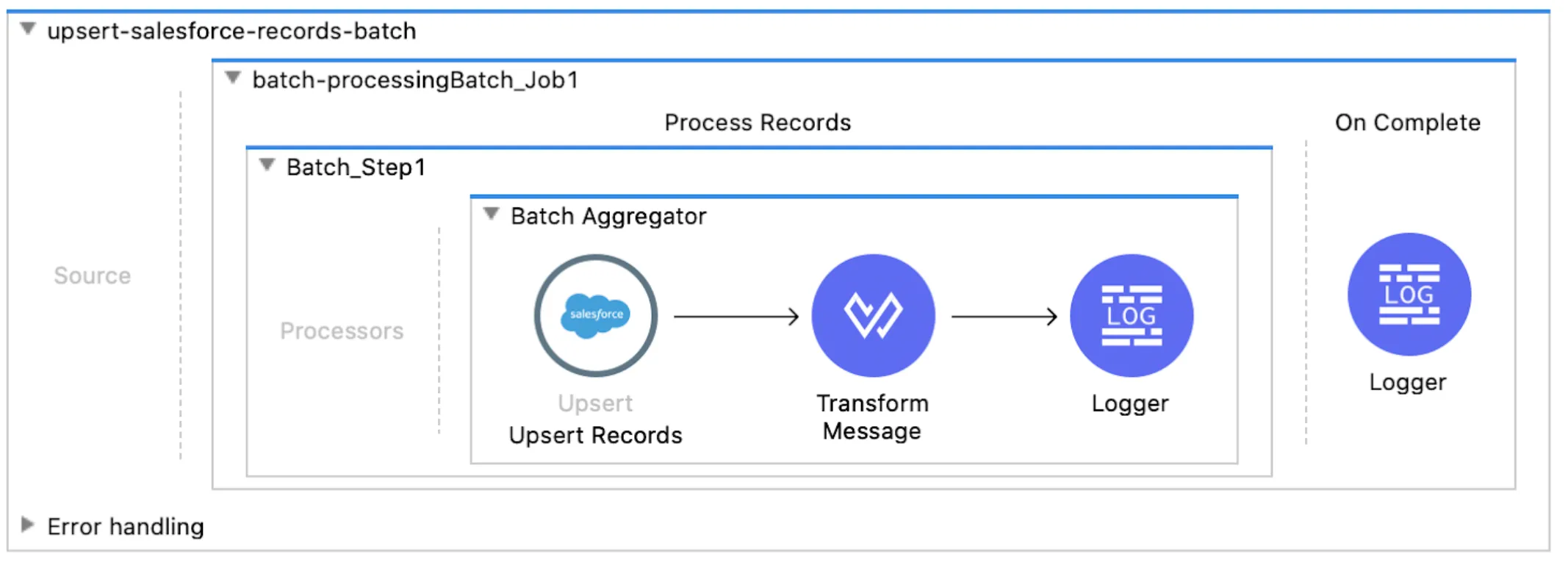
There are some things to consider when using SOSL over SOQL: One of the advantages of this is that we are able to retrieve multiple objects in a call and we are saving a couple of API calls - This can be used on processes that need just a few records. Massive amounts of data might include some complexity on how we create the SOSL expression, but in the end we can just adjust the limits (https://developer.salesforce.com/docs/atlas.en-us.soql_sosl.meta/soql_sosl/sforce_api_calls_sosl_limits.htm) in case we need to.
Let me know if you think this is helpful and I will be happy to enhance this process as well.
GitHub repository
You can pull the code from this repository if you want to see the whole process working.
FAQs
Frequently asked questions about this post.
-
What is the difference between SOQL and SOSL in Salesforce?
A SOQL query is the equivalent of a SELECT SQL statement and searches the org database, while SOSL is a programmatic way of performing a text-based search against the search index. Use SOQL when you know which objects the data resides in (to retrieve from one or related objects, count records, sort results, or read number/date/checkbox fields), and use SOSL when you don't know which object or field the data lives in and want to search a term across fields, retrieve multiple objects efficiently whether or not they are related, query a division, or handle Chinese, Japanese, Korean, or Thai text.
-
How do I build the SOSL search expression in this Mule 4 app?
First, in the Preparing Search Request DataWeave component, convert all the external Id values from the original response into a single plain string concatenated by
ORusingjoinBy " OR ", which produces a value the Salesforce search understands. Then pass that string into the Salesforce Search as the:idsparameter inside the expressionFIND { :ids } IN ALL FIELDS RETURNING Contact(Id,external_id__c,Email), Lead(Id,external_id__c,email), which asks Salesforce to search all fields and return the listed fields from Contacts and Leads. -
How does the app decide whether to update a Contact or Lead versus create a new Lead?
After the search returns, the app groups results by type and builds a
salesforceResponseMapplus a Collect by type variable separating found Contacts and Leads keyed by external Id. The filter-and-collecting-records flow then filtersvars.originalPayloadagainstvars.groupedObjects.fromContacts.id: records NOT found are kept to be created as Leads, while records that ARE found are collected and mapped for update as Contacts (the Leads group works the same way). The enqueue-batch-jobs step then sets the payloads for the update and create operations. -
Why use SOSL over SOQL for this kind of process?
One advantage is that you can retrieve multiple objects in a single call, which saves a couple of API calls, making it a good fit for processes that need just a few records. The post notes that massive amounts of data might add complexity to how you build the SOSL expression, but in the end you can adjust the limits documented at https://developer.salesforce.com/docs/atlas.en-us.soql_sosl.meta/soql_sosl/sforce_api_calls_sosl_limits.htm if needed.
-
How does the batch processing reuse the same flow for both updates and upserts?
In the enqueue-batch-jobs component the app specifies the
sObjectand externalId as variables, so instead of adding a separate batch component for each type it dynamically passes thesObjectfor updates and thesObjectplus externalId for upsert calls, which lets the batch processes be reused. One batch focuses on updating objects and controls the Salesforce response with a DataWeave component that collects each item's id, success flag, and the field, message, and statusCode when the operation was not successful.